Some stories have a peculiar ability to leave their mark on our consciousness and become a part of who we are. An example of such a story for me is The Starfish Thrower. This humble story is one of my favorites, as it taught me about hard work, understanding, and how important every step is. Recently, having been motivated by this story, I began developing a video for learning purposes. The media used here is the ongoing story I received from someone and retelling it differently.
A Story That Sparked Change
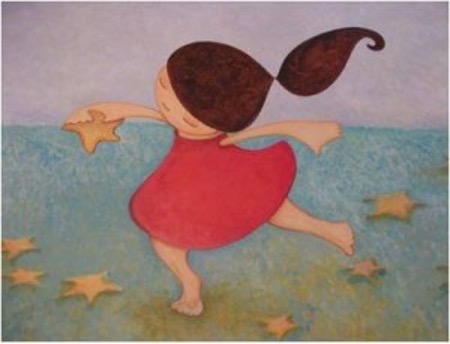
Just think of getting up and seeing beautiful sunshine on the shores of a calm sea at dawn. The first-morning sunlight glimmers through the sand as the water gently recedes, revealing hundreds of thousands of starfish washed ashore. The sand touches for as far as one can see, starfish are visible all over, and the sound of the ocean barely whispers. In the hustle and bustle of these frail personalities, a human youth tries to walk on sand with the intent to save. In a day, they pick each starfish and throw them back into the sea, believing that those creatures belong to the sea.
One day, a passerby looks at this act of young people and stops for a while to watch this young man. The effort appears almost absurd since numerous starfish are still on the beach. The passerby stands there for a few moments, frowning, and the question seems to be on the tip of their tongues as they approach. “Why are you going through all this trouble?” people will want to know. They say there are thousands of starfish here. And they get frustrated and say, “You can’t possibly make a difference.”
The young person stops, looks at the sea, picks one starfish, and holds it with both hands looking at it. The silence is filled with the weight of the question as if the magnitude of the job is just now sinking in on them. The passerby, who wants an answer, pays attention and waits for the response. And then, without thinking, the young person looked up and said with determination, “It made a difference to that one,” before throwing the starfish back into the sea.
This small interaction can be a lot more profound than the concept of someone assisting another. That is the story’s central message, and perspective is one of the most essential aspects of life. In addition, when people make an effort, they are rewarded. The young person comprehends that, although they may not be able to save all of the starfishes, at least the one they have just put back into the sea has been given a shot. It is a straightforward and powerful story — as it goes straight to the heart and shows that sometimes the most significant impact of an action can be huge, even if it may look insignificant in a world where everything seems so big. It is a lesson that shows that at least attempting something.
From Inspiration to Creation
Influenced by the story’s effectiveness in changing me, I felt compelled to retell the story in a way that was engaging to the audience. Since then, I have recorded a short video where I shared pictures of the material and read aloud them, combining visuals and storytelling to make the lesson more comprehensible. My target audience was young learners, and I believed that the call to action to change something must reach them.
Reflections on the Creative Process
It was exciting and meaningful to produce this video. It made me contemplate how to bring a compelling and robust message based on a story and put it in an accessible and meaningful form to the audience. Much thinking was needed to approach a particular discussion in light of narrative and digital concerns. As I began creating content, I soon learned the importance of the productions’ images, music, and voice-over elements. Every part had to be in harmony to tell the story while not overemphasizing one aspect with the other. The video was not only the retelling of a story, but the experience of the video had to be the story.
One of the most important things I learned was how people like to keep things simple when telling stories. There is no story, characters, plot, or climax in The Starfish Thrower, only a tiny act of throwing starfish by a young man. Still, the story’s moral is clear, concise, and easy to remember, even for young readers. By the time I was editing the video, I realized that simple is better. Sometimes, I wanted to put more details or to make the picture brighter and more attractive, but then I recalled that it would hinder the meaning. Thus, I concentrated on the simplicity of decision-making, guaranteeing that the viewer would experience the same sense of meaning as I had from the story, both in images and in words.
Twine Experience
Twine helped me plan my video, and I found it to be a fun and informative activity. I employed it to lay out the story and explore different possibilities of how I wanted it to evolve. The structure of Twine opened the chance to experiment with how the audience would receive some of the choices and transitions. It was helpful for structure and seeing the whole’s shape to tell a compelling story. It also confessed the ability of branched storytelling, where the audience sees different outcomes — effective in education, training, and storytelling.
Final Thoughts and Next Steps
This project helped me develop my thinking about storytelling as an effective knowledge-sharing method. I discovered that when storytelling is done effectively, it can also break down concepts, elicit feelings, and facilitate a call to action. Adding on to this, using video and Twine as part of the digital mediums makes learning even more effective. As for the future, I want to expand the opportunities for using storytelling features in education to make classes practical, meaningful, and memorable.
Recent Comments